
 Local Minnesota Home Improvement
  Request a Quote
  Get My Offer
Construction Services
Carpet Installation
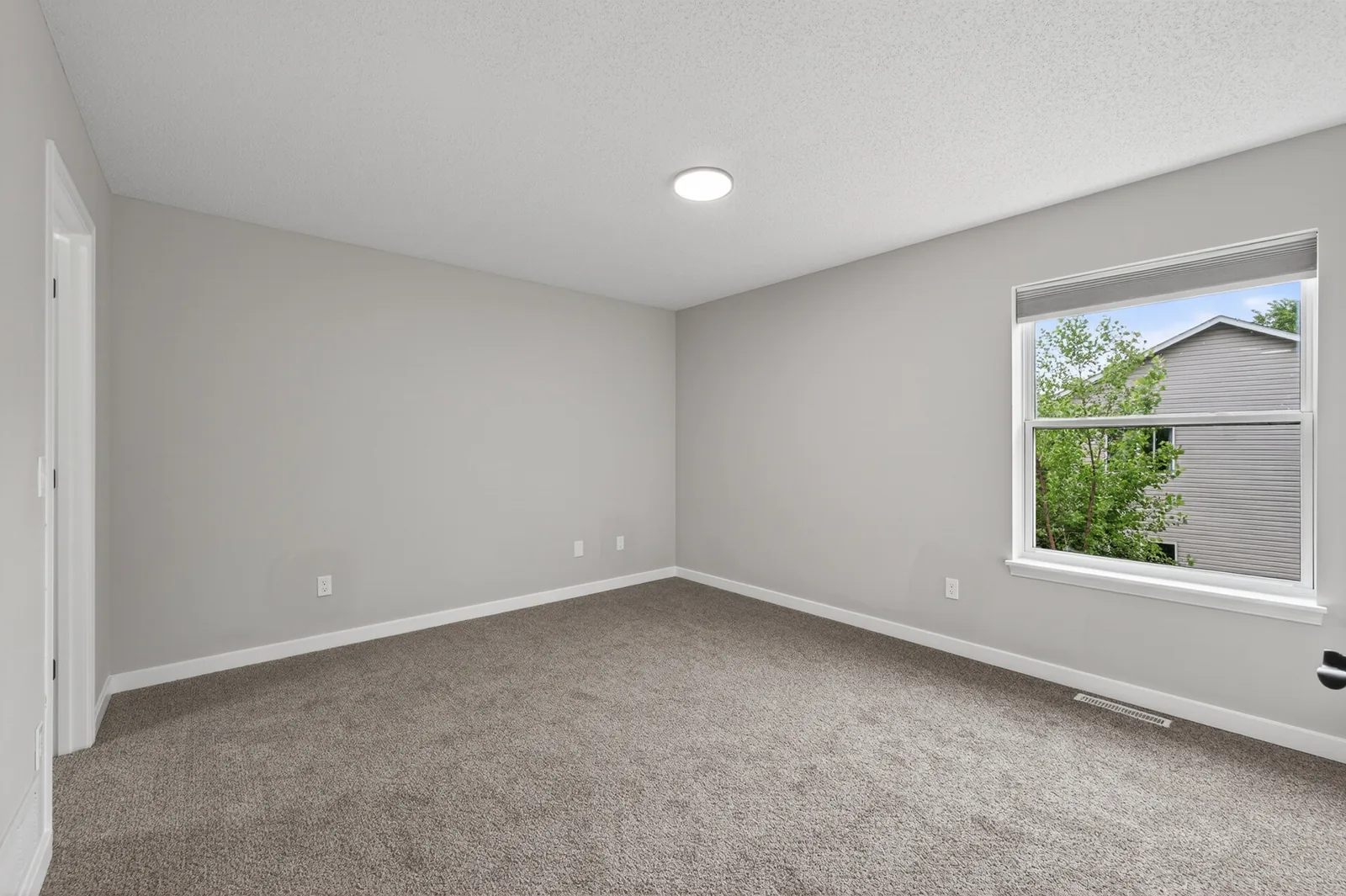
Bedrooms, stairs and lower levels. The rooms where nobody actually wants a hard floor.
Carpet is still the right answer for bedrooms, stairs and finished basements, where warmth underfoot and sound absorption matter more than durability against wet boots. It is also the fastest way to make a tired room feel finished.
What separates a carpet that still looks right in five years from one that ripples and shows seams is the pad underneath and how tightly it was stretched during install. We prepare the subfloor, lay proper cushion, and stretch the carpet in rather than simply laying it down.
What this covers
- New carpet installation
- Cushion and pad
- Stairs and landings
- Removal and disposal of old carpet
- Subfloor preparation and transitions
Where carpet still wins
Hard flooring took over most of the house for good reason. It cleans easily, handles wet boots, and holds no odor. But the arguments for hard surface in an entry or kitchen weaken the further into the house you go.
A bedroom floor gets walked on barefoot, usually first thing in the morning, and rarely sees worse than a spilled glass of water. Carpet is warmer underfoot than anything else you can put down, and it is the only flooring that does anything meaningful about sound. That matters in a two-story house where somebody is awake upstairs while somebody sleeps below.
Basements are the other place carpet earns its keep. A finished lower level in Minnesota sits on a concrete slab that stays cool all year. Carpet over proper cushion breaks the contact between your foot and the cold slab in a way vinyl plank does not.
The honest caveat: if your lower level has ever taken on water, carpet is wrong until the water problem is solved. Wet basement carpet is a demolition job, not a cleaning job. Fix the grade, the gutters, or the sump first.
- Bedrooms, where warmth and quiet beat scratch resistance
- Stairs, where footing and noise both improve
- Finished basements over slab, once moisture is under control
- Bonus rooms and offices above a living space
The cushion underneath matters
Most people shop carpet by looking at carpet. They pull samples, rub the pile, compare colors. Almost nobody asks what goes under it, and that is the part deciding how the floor feels and how long it lasts.
Cushion is rated by density and by thickness, and they are not the same thing. Density is weight per cubic foot, and it is the number that matters. A thick, soft, low-density pad feels wonderful in the showroom and collapses in the traffic lane within a couple of years. Then the carpet backing flexes with every step, the fibers work against each other, and you get wear in a path down the hallway no cleaning will bring back.
Thicker is not better past a point. Too much cushion lets the floor move, which loosens the stretch, works the seams, and on stairs makes the tread feel unstable underfoot. Most residential carpet is designed around a specific cushion thickness range, and going outside it can void what the mill says about the product.
Carpet over a slab adds one consideration. Concrete gives off moisture vapor even when it looks and feels dry. Cushion with a moisture barrier is worth the difference in a basement, and not worth it in an upstairs bedroom over plywood.
Stretch-in versus glue-down installation
There are two ways to attach carpet to a floor, and they are not interchangeable. Stretch-in is the residential standard. Tack strip goes around the perimeter, cushion goes down inside it, and the carpet is stretched across the room with a power stretcher and hooked onto the strip under tension.
Glue-down adheres the carpet directly to the subfloor with no cushion at all. It is what you see in offices and commercial hallways. It handles rolling loads, it will not ripple, and it is thin and hard. In a house it is the wrong answer almost every time, because you gave up the cushion that made carpet worth installing.
The failure people describe as carpet going bad is usually a stretch-in job that was not stretched. Laid in with a knee kicker alone, the carpet has slack from day one, and six months later there are ripples across the room. Those ripples are not a defect. They are slack that was always there, working its way to the surface.
This is fixable without new carpet. If the carpet is otherwise sound and the ripple pattern is consistent, it can be pulled up at the perimeter, re-stretched, and re-hooked. That costs a fraction of replacement, and it is worth asking about before you shop.
Stairs, landings and seams
Stairs are where you find out whether the installer knew what they were doing. Every tread and riser is a separate stretch, the carpet has to wrap the nosing tightly, and there is no forgiveness because you see the work at eye level every trip up.
Carpet runs on stairs two ways. Waterfall lets the carpet fall straight over the nosing to meet the next tread. Upholstered, or cap and band, wraps the carpet tight under the bullnose and follows the shape of the step. Upholstered looks better on an open stair and on a patterned carpet and costs more in labor; on a plain box stair in a back hallway, waterfall is fine.
Landings need their own attention because carpet direction has to stay consistent through the turn. Pile has a direction, and a landing installed with the nap running the wrong way reads as a different color than the flight above it. That is not a lighting problem. That is a seam nobody planned.
Seams in a room follow the same rule. A seam should run away from the main light source, not across it, and sit out of the primary walking path where it will not get worked open. A seam you cannot see in February at four in the afternoon with the lamps on was placed with some thought.
Measuring, waste and seam layout
Carpet comes off a roll in a fixed width. Every room wider than that roll needs a seam, and where it lands is decided by how the carpet is cut, not by where you would like it.
Pile direction has to run the same way through every connected space. That constraint, plus roll width, generates waste. A room a little wider than the roll can require a full second run to cover a narrow strip, and that leftover is unavoidable rather than careless. Anyone promising no waste on an odd-shaped floor has not measured it yet.
We plan the seam layout before anything is ordered and walk you through where the seams fall and why. If a seam has to land somewhere visible, you should know in advance instead of on install day. Sometimes the answer is to shift furniture, and sometimes it is to accept it, because the alternative costs more material than the seam is worth.
Subfloor work gets settled at the same time. Squeaks are fastener problems and get fixed before cushion goes down, because nobody wants to open a stretched floor back up. Transitions to hard flooring at doorways get planned then too. If a floor is out of level enough that we suspect a framing or structural cause, that goes to a structural engineer, not to us.
Common Questions
Can my rippled carpet be fixed without replacing it?
Do I really need new pad, or can I reuse what is there?
Should I put carpet in a basement that gets damp?
Will the seams show?
Is glue-down carpet ever the right choice for a house?
Ask Us Anything, Anytime.
Have questions about selling your house? Call, text, or send us a message and we will get back to you.